
Lake Superior Wreck Diver Specialty
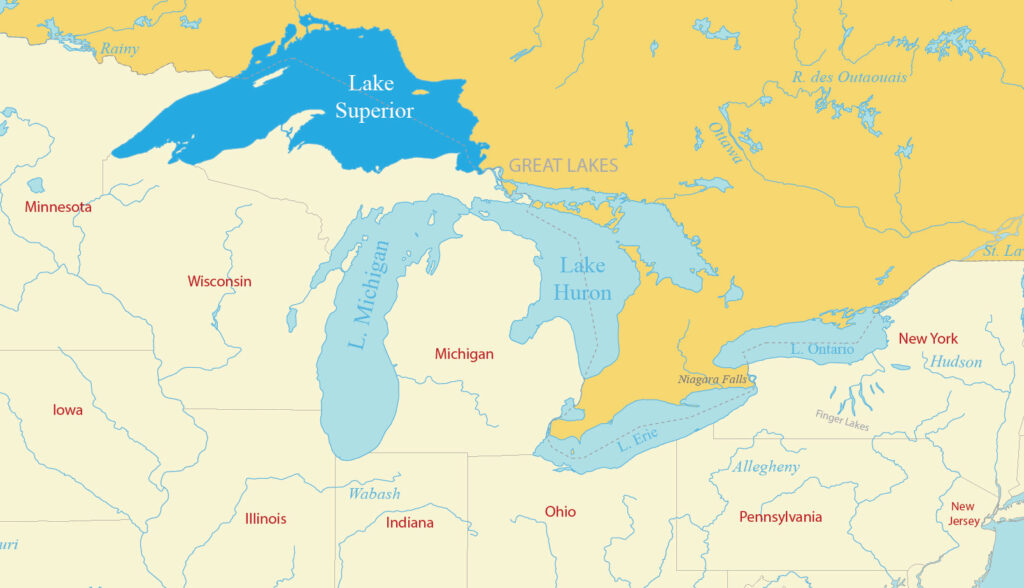
Courtesy GISGeography
Lake Superior — the largest freshwater lake by surface area in the world — is legendary among wreck divers. Its frigid, crystal-clear waters have preserved hundreds of shipwrecks in extraordinary condition, many within protected underwater preserves like the Alger Underwater Preserve near Munising. This specialty immerses you in Superior’s geological origins, its demanding ecology, and the maritime history that made it one of the most storied — and dangerous — shipping lanes on earth.
This specialty is one of six required for the Great Lakes Master Scuba Diver certification.
What You’ll Learn
Classroom / Online Presentations covering:
- The geological processes that created Lake Superior
- Its place and function within the hydrological network of the five Great Lakes
- The development of shipping technology commonly used on the lake
- The background and basic causes of its shipwrecks
- The history of its marine preserves
- Ecological challenges — past, present, and future
- Resources available for researching shipwrecks for open water dives
Confined Water Training
Skills reviewed and practiced during confined water sessions include:
- Configuration and management of the scuba kit to be used on dives
- Establishing optimum weighting and buoyancy control
- Rescue techniques
- Appropriate fin kick skills
- Deployment, use, and retrieval of penetration lines
Independent Research
You will conduct independent research into specific shipwrecks available to recreational divers within defined underwater preserves. This includes visiting a maritime museum and utilizing suggested reference materials — books, videos, and websites.
For each wreck, you will prepare information covering:
- Type of ship, design, and construction details
- Circumstances of its sinking
- Areas or configurations requiring extra care for safe recreational diving
- A recommended dive plan for exploring the wreck
Open Water Dives
Four dives on at least two different wrecks within Lake Superior’s underwater preserves. During the dives you will:
- Conduct a navigation and overview of the wreck
- Take measurements and map its orientation and structures
- Document specific features through sketches, photos, or hand-drawn maps
- Practice penetration techniques outside of the wreck
Upcoming Classes
No classes are currently scheduled. Contact us to inquire about scheduling a class.